Discover the Ancient Civilisations Workbook: A Journey Through Time
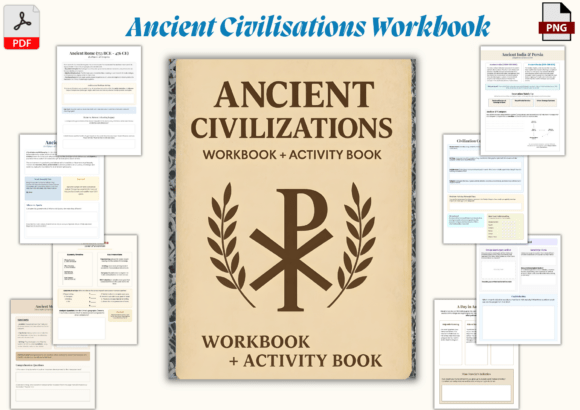
The Ancient Civilisations Workbook is more than just a collection of pages—it's a gateway to understanding the foundations of human history. Designed for students aged 5–9, this 8.5 x 11 inch printable PDF workbook offers 22 engaging pages filled with interactive activities, historical visuals, and creative challenges. It’s an ideal resource for classrooms, homeschoolers, and history enthusiasts who want to explore the world’s earliest societies in a fun and educational way.
From the towering pyramids of Egypt to the sophisticated city-states of Greece, this workbook takes learners on a journey through time. It covers key civilizations such as Mesopotamia, China, Rome, India, and the Maya, helping students grasp how these ancient cultures shaped modern society. With its focus on innovation, government, religion, and trade, the Ancient Civilisations Workbook provides a comprehensive yet accessible introduction to world history.
Why Choose the Ancient Civilisations Workbook?
One of the standout features of this workbook is its interactive and student-friendly layout. Unlike traditional textbooks, it encourages hands-on learning through timelines, reflection tasks, and creative projects. Students aren’t just reading about history—they’re engaging with it, making connections, and developing critical thinking skills.
Additionally, the Ancient Civilisations Workbook is designed to be visually stimulating. Historical images, maps, and diagrams help bring ancient societies to life, making complex concepts easier to understand. Whether you're a teacher looking for supplemental materials or a parent seeking educational tools for your child, this workbook offers a well-rounded approach to learning about the past.
Common Mistakes When Using the Ancient Civilisations Workbook
While the Ancient Civilisations Workbook is a valuable resource, there are some common mistakes that users should avoid to get the most out of it. One frequent error is not taking the time to review the workbook’s structure and objectives before diving in. Without a clear understanding of what each section aims to teach, students may miss out on key insights or struggle to complete activities effectively.
Another mistake is assuming that the workbook can be used as a standalone resource without additional support. While the Ancient Civilisations Workbook is self-contained, pairing it with supplementary materials—such as videos, documentaries, or museum visits—can greatly enhance the learning experience. For example, watching a documentary about the Maya civilization can provide context for the cultural projects included in the workbook.
Misunderstanding the Target Audience
Some educators and parents mistakenly believe that the Ancient Civilisations Workbook is suitable for all age groups. However, it is specifically designed for students in grades 5–9. Using it with younger children may result in frustration due to the complexity of some tasks, while older students might find the content too basic. It’s important to assess the developmental level of your learner before starting the workbook.
Similarly, overlooking the professional design and educational intent of the workbook can lead to underutilization. The Ancient Civilisations Workbook is not just a set of exercises—it’s a tool for fostering curiosity, creativity, and critical thinking. Teachers and parents should encourage students to reflect on their learning and connect historical events to modern-day relevance.
How to Use the Ancient Civilisations Workbook Effectively
To maximize the benefits of the Ancient Civilisations Workbook, consider the following strategies:
- Set clear goals: Before beginning, identify what you hope to achieve—whether it’s improving historical knowledge, enhancing writing skills, or sparking an interest in archaeology.
- Encourage exploration: Allow students to choose which civilizations they want to focus on. This personalization increases engagement and helps them take ownership of their learning.
- Use real-world examples: Connect ancient practices to modern ones. For instance, comparing Roman aqueducts to modern water systems can make history more relatable.
- Review and reflect: After completing sections, ask students to summarize what they’ve learned and how it relates to today’s world.
By incorporating these methods, you can ensure that the Ancient Civilisations Workbook becomes a meaningful and enjoyable part of your educational journey.
What to Check Before Using the Ancient Civilisations Workbook
Before purchasing or downloading the Ancient Civilisations Workbook, there are a few things to consider:
- Format and accessibility: Ensure that the format (PDF) works with your device and software. Some users may need to convert the file or use specific programs to view it properly.
- Quality of content: Review sample pages or descriptions to confirm that the material aligns with your educational goals. Look for variety in activities and depth of historical coverage.
- Support resources: Check if there are any accompanying guides, answer keys, or teacher notes available to help facilitate learning.
- Cost and value: Compare prices across platforms and assess whether the cost is justified by the quality and educational value of the workbook.
By carefully evaluating these factors, you can make an informed decision about whether the Ancient Civilisations Workbook is the right choice for your needs.